- Empty cart.
- Continue Shopping


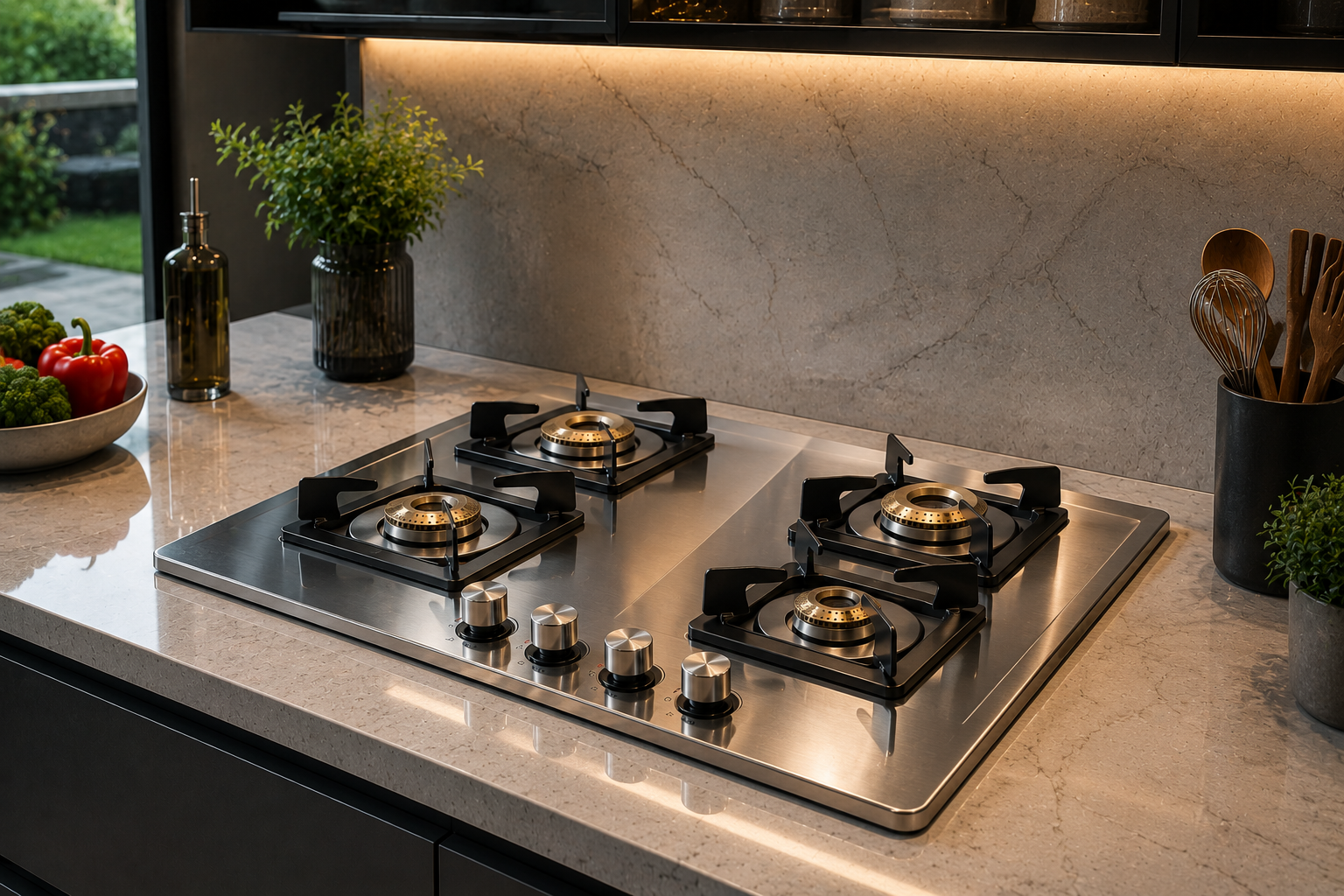
The kitchen is the nerve center of the home, where there is a lot of daily work, and there is no appliance that carries a greater part of the daily workload than the cooking surface. Although other materials have been introduced in the market, the stainless steel cooktop is still the ultimate one when you consider durability and professionalism in performance.
An elegant kitchen must have a combination of durability, efficiency, and style. Homeowners prefer a stainless steel cook top due to its rust-resistance, smooth look, and durability of its performance. This guide discusses the reason why this traditional material still reigns in professional and home modular kitchens.
What is a Stainless Steel Cooktop?
A stainless steel cooktop is a cooking appliance whose body and surface are made of corrosion-resistant steel alloys. In contrast to freestanding stoves, a stainless steel gas cooktop or stainless steel kitchen cooktop is usually made to be integrated, either mounted flush or semi-flush within the kitchen counter.
They are designed to hold heavy weight and can withstand the physical abuse of heavy cookware, and thus are the workhorses of the cooking world.
Why Stainless Steel Cooktops are Popular
The popularity of stainless steel in contemporary architecture is preconditioned by the specifics of the material:
- Rust Resistant: Rust resistant stainless steel cooktop is necessary in wet kitchen settings where steam and water spillages are always witnessed.
- Heat Tolerance: It is a heat-resistant cooktop; therefore, it is not distorted or discoloured during the high temperatures required to sear or slow roast on a high flame.
- Non-Porous Hygiene: Stainless steel is non-absorbent to bacteria and odors, making it a clean surface to prepare food.
Key Features of a Stainless Steel Cooktop
When choosing a high-quality kitchen cooktop, you should be able to find such engineering characteristics:
Brass Body, Finished in Stainless Steel.
The frame of a high-end cooktop comprises a high-gauge steel frame. This guarantees that there is structural integrity, whereby the surface does not flex when many large pots are in use.
High-Efficiency Burners
In modern cooktops, the burners are made of forged alloy or brass. These burners have high efficiency with high thermal conductivity, and this ensures that the flame is distributed evenly resulting in faster cooking time and less gas burnt.
Automatic Ignition
The automatic ignition cooktop provides a “press-and-turn” convenience. It simplifies cooking and increases kitchen safety by removing the use of matches or external lighters.
Easy-to-Clean Surface
A smooth, brushed finish of an easy clean cooktop. The non-reactive surface also means that the surface can be wiped off again with minimum effort to keep the surface highly professional over the years.
Types of Stainless Steel Cooktops
Depending on the volume of cooking in your household and the design of your kitchen, how your appliance is set up should be determined:
2 Stainless Steel Cooktops Burners.
The 2-burner stainless steel cooktop is the best solution for studio apartments, small kitchens, or a second preparation unit. It has a smaller footprint than its competitors, which do not compromise flame power.
3 Burner Stainless Steel Cooktops
The most versatile cooktop that can be used by medium-sized families is a 3-burner stainless steel model. It enables the cook to work on a main meal, a side dish, and a simmering sauce at the same time.
Inbuilt Stainless Steel Cooktops.
To achieve a smooth appearance, a built-in stainless steel cooktop is mounted into a cut-out in a countertop. This is the characteristic of the modern modular kitchen designs, to do away with the gaps whereby food particles may accumulate.
Benefits of Using a Stainless Steel Cooktop
There are a number of long-term benefits when investing in a durable kitchen cooktop:
- Durability: Glass can break, but a stainless steel body is nearly impossible to break in most cases.
- Neutral Versatility: The neutral metallic color is compatible with any color range, whether it is colorful tiles or bare grey concrete.
- Industrial Strength: It can be easily used to move the weight of large pressure cookers and heavy cast-iron skillets.
Stainless Steel Cooktop vs. Glass Cooktop
The distinction between glass and stainless steel cooktops is usually a matter of taste, between Style and Strength. Glass cooktops are very sleek and modern, and must be handled with caution to prevent cracks. Although still classy, stainless steel is preferred due to its industrial durability and capability to endure heavy daily rough usage without shattering.
How to Choose the Best Stainless Steel Cooktop
The technical checklist that must be looked at to discover the most appropriate stainless steel cooktop includes:
- Quality of Material: Seek 304-grade steel, which has the best pitting and corrosion resistance.
- Burner Layout: Make certain that there is sufficient “Real Estate” between burners to accommodate two large pans.
- Safety Features: Prefer models that have strong, anti-wobble pan supports.
- Brand Reputation: Select manufacturers with a proven after-sales service and spares.
Stainless Steel Cooktops for Modular Kitchens
The compact kitchen cooktop is a built-in appliance that is part of the modular kitchen design. They are designed to fit with modern cabinets, providing it a clean, flush look that utilizes as much space as it can to the countertop. The metallic luster is used to reflect the under-cabinet lighting, creating a bright and professional atmosphere.
Safety Features to Look For
The uncompromising element of safe cooking appliances is safety:
- Flame Failure Protection Cooktop: This is a critical sensor to have since it shuts off the gas supply in case of an accidental draft or spill that might extinguish the flame.
- Anti-Skid Supports: Rubber or cast-iron anti-skid supports, which are high gripped and heavy in weight to prevent the cookware from slipping during aggressive stirring.
- Heat-Resistant Knobs: Knobs are available in bakelite or shielded metal, so that they will remain cool to the touch even after hours of cooking.
Maintenance Tips for Long-Lasting Performance
Follow these stainless steel cooktop maintenance tips to preserve the material’s luster:
- Learn the Surface Cleaning: Wipe the surface with a soft and damp cloth daily to avoid grease.
- Never use Harsh Scrubbers: Steel wool is never to be used; it will leave micro-scratches dulling the finish. Move your cloth in the direction of the “grain.”
- Clean Burners Occasionally: clean burner holes with debris to keep the blue flame even.
- Clean up the Acidic Spills immediately: Lemon juice or tomato sauce is considered to be acidic and, therefore, they should be washed promptly to avoid etching the surface.
Cost of Stainless Steel Cooktops
The cost of a stainless steel cooktop depends on the steel gauge (thickness), the number of burners, and the ignition type.
Expert Tip: Although a low-end stainless steel cooktop can save you money in the present, a mid-range cooktop with denser steel will greatly enhance the durability of the appliance and its energy consumption.
Latest Trends in Stainless Steel Cooktops
- Smart Ignition Systems: Built-in technology that heats the burner when the knob is turned on, and does not need batteries.
- Minimalist Stainless Finishes: A move to the more fingerprint resistant finishes of Satin and Silk.
- Energy-Efficient Burners: These are made to focus heat in the middle of the pot and minimize the energy loss at the periphery.
Frequently Asked Questions (FAQ)
Q1. Is stainless steel easily scratched?
Ans: The steel is of high quality and cannot be scratched off, but it is scratch-resistant. In order to sustain the appearance, it is always cleaned using a soft microfiber cloth, working against the metal grain.
Q2. Is it possible to use a stainless steel cooktop piped gas (PNG)?
Ans: Hoo, you will require a technician who will change the nozzles because PNG is of a different pressure than LPG cylinders.
Q3. Why would an in-built cooktop be an advantage?
Ans: An integrated design gives the appearance of a continuous appearance together with your counter top, eliminates falling food in openings, and is usually easier to clean compared to freestanding cookers.
Q4. Why is my fire yellow?
Ans: A yellow flame is a sign of inappropriate combustion, which may be due to blocked burner holes or the wrong proportion of air and gas. This is normally solved by a fast cleaning.
Q5. Is ‘304-grade’ steel worth the extra cost?
Ans: Yes. 304 grade has higher levels of nickel and chromium; therefore, it is much more resistant to rust and chemical corrosion as compared to cheaper 200-series steel.
Conclusion: Upgrade Your Kitchen with a Stainless Steel Cooktop
The stainless steel cooktop has a combination of durability, efficient cooking, and sleek design; it is the most appropriate product to use in the modern kitchen. It delivers the disjuncture between the reliability of the past and the reliability of the future. You can be sure of a safer, faster, and lovelier cooking environment in your home by choosing a model that provides a balance between material quality and high-efficiency burners.
Find out about high-quality stainless steel cooktops today to experience a smarter and more fashionable cooking experience.
automatic ignition cooktopeasy clean cooktophigh-quality kitchen cooktopstainless steel cooktopstainless steel kitchen cooktop
